The funky offspring of the Galiano Club, the Food Program began in 2008.
The Galiano Community Food Program strives to ensure that Galiano Island is a thriving, livable, food-secure community, where every resident feels included, welcome and empowered to build a deeper connection with their food system. In so doing, the Program improves Galiano’s ecological sustainability and community resilience in the face of climate change and uncertainty. The program seeks to set an example that reaches beyond our local community and spreads across the country.
Food Program Blog
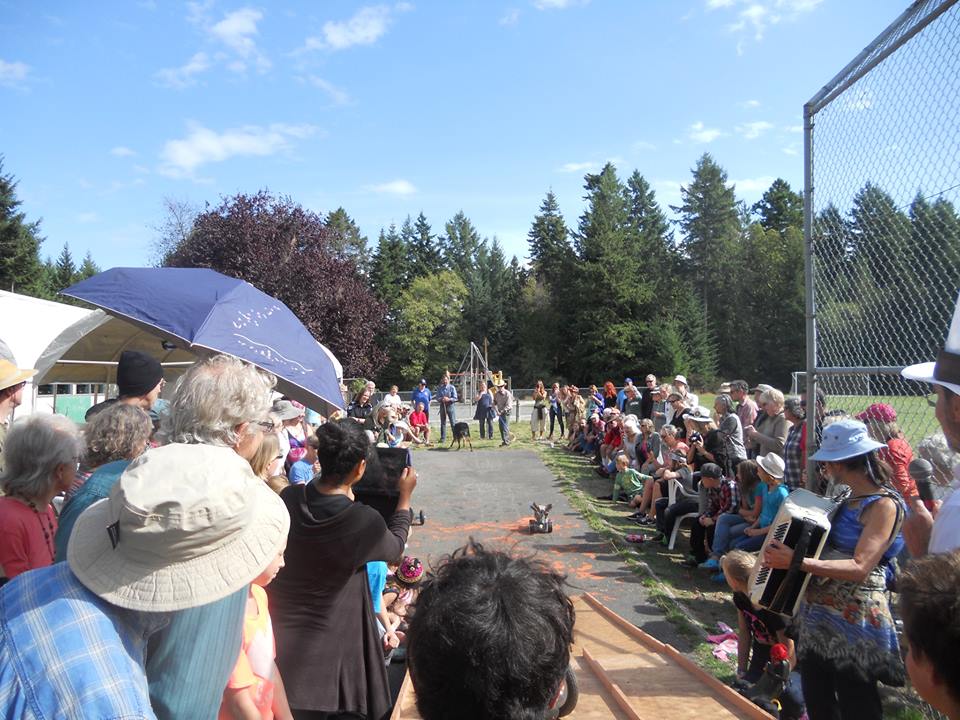
The 10th Annual Community Potluck Picnic
The Galiano Community School & Activity Centre, Sunday Sep 8, 12-4pm, rain or shine
Come join your neighbours, bring a friend, meet someone new. Share a favourite dish, stories, games and live music. Last year was a blast! Celebrate the end of a great summer. Everyone, young and old, is welcome.
Pie-baking contest! Zucchini Races! Soccer game! Tug-o-war!
Zucchini races!
Two categories: kids and adults. Each category is divided into two vehicle types: Integral (i.e. the vehicle would collapse if the zucchini was removed) and modified. There is also an award for the most creative vehicle design. Vehicles can be no more than 13” wide, and to win a prize, all the power must be supplied by the incline ramp. However, in the words of the judges:
“No zucchini, no matter how outrageous, will be refused!”
Upcoming Gleaning Season
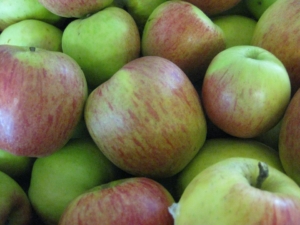 Recently at a Food Literacy conference in Victoria, I was asked to share a story of a moment I saw food literacy in action. I had so many to choose from! But what came to mind was the many times I’ve witnessed volunteer fruit pickers participating in the Gleaning Project who share recipes and techniques for handling the produce we are picking. “Can you dry this variety of apple?” “Have you ever made plum sauce for using in Asian recipes?” “I never get around to processing these, my kids just eat them all fresh.” And, every year: “What do you DO with quince?”
The Gleaning Project organizes groups of volunteer pickers to pick excess fruit (and sometimes vegetables). The harvest is divided 3 ways: One third for the landowner, one third for the Food Program, and one third divided amongst the picking volunteers. The Food Program share is used in our events, as well as distributed via the clinic, school and food bank. We gather all of the harvest together first and weigh everything so we can do things as fairly as possible, and so we can keep an accurate record for our notes and our funders. It’s an exercise in working communally, and everyone takes home some fruit picked by each of the volunteers.
We are very grateful to the landowners who generously host us, and work […]
Food Program Summer Roundup
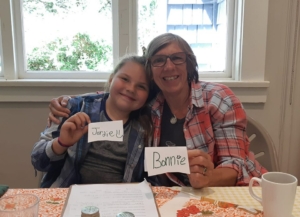 Afternoon Tea with Games
In May we tried a new event: An Afternoon Tea with Games. This idea sprang from requests we’d received from seniors. Some felt that our popular Thursday Games Night can be a little loud. (Admittedly Games Night can be a raucous affair with kids playing Twister and Hungry Hippo, and adults playing Ping Pong and Scrabble – who knew scrabble was so competitive?) So we decided to try a quieter games afternoon.
A dozen seniors showed up for our inaugural event. The majority played cards, though once again scrabble made an appearance, and all enjoyed a classic afternoon tea of scones, sandwiches and cake. Plus while they were playing the volunteers and I made dinner for anyone who wanted to eat at the end of the afternoon, or take something home with them for later.
So if a quieter games afternoon might be something you’d enjoy – then mark your calendar. We’ll try another one on September 26th at 1:30pm till 3:30pm – Come join us. (I promise there won’t be any Twister!)
CRFair Roundtable
On June 3, Emma attended the Capital Region Food and Agriculture Initiatives Roundtable on Food Literacy. There were interesting discussions about Food Justice, mostly around indigenous issues of land use and also barriers for refugees, and programs that are tackling these. There is a new food atlas […]
Sheep on Galiano
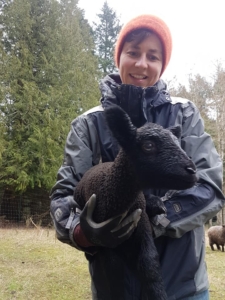 This month, we asked some of Galiano’s sheep farmers to share a few words about their experience keeping sheep. Thanks very much to Mary Jean Elliott and Marcia DeVicque for their delightful and thoughtful submissions at the busiest (lambing) time of year!
The owners of the Page Farm raised sheep from 1905 to 1977, and Gerald and Mary Jean continued the tradition on the same acreage (Elliott Farm) from 1977 to now. There have been sheep raised on the property for 108 years. Sustainability is determined by the quality and size of the acreage and the number of sheep using the property.
Sheep can become great pets. One year we decided to castrate a ram because we heard that a two-year-old wether (castrated ram) is the best meat (what the Queen eats). After castrating, he became so tame that our children would not let us butcher him, so he ended up as a pet and died of old age on the farm.
Sheep love apples. Sheep will eat cedar and fir tree branches and leaves. They keep the grass cut and the trees trimmed. They also provide the best source of fertilizer for garlic, and wool and organic, delicious food, especially when their diet is supplemented with apples. We have lived with and enjoyed our sheep for many years. The only sad times occurred when out-of- control […]
School Garden News
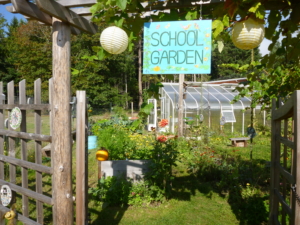 The School Garden is one of the many Food Program projects on Galiano. Coordinators and community volunteers work with the kids, teaching them about gardening, ecology and how to grow food. Kids are involved in planning, tastings, and cooking their harvest. The Food Program also organizes a mini Nettlefest and Applefest for the kids.
The School Garden has a long and impressive lineage of Coordinators cultivating enthusiasm for gardening. Galiano students have had the opportunity to learn alongside Janice Oakley, Colleen Doty, Janna Feldman, and, most recently, Brahmi Benner.
Brahmi brought an educator’s perspective to the role, emphasizing open-ended, playful exploration of the children’s interests, as well as giving the children a safe place to practice with real tools to build skills. Brahmi is moving on and she will be much missed by the Food Program team and the kids and staff at the school for the amazing enthusiasm she brought to every event.
organic garden in my backyard. After working as a native plant nursery manager, my experience expanded to include a deep knowledge of food uses, plant propagation and seed saving of local plants.”
Patti holds a science degree and became a teacher, hoping that she would be able to work with the Galiano community. She is thrilled to have this opportunity to help with the school garden and to share what she knows with the Galiano students.
In […]
Sustainable Seaweed Harvesting
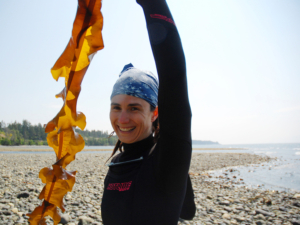 Last June’s Seaweed Harvesting Workshop was one of the most popular we’ve run, and so we are thrilled to be able to bring Amanda Swinimer back. Participants appreciated being given the opportunity to learn both at the beach and in the classroom, as well as getting to taste many varieties of seaweed. Here’s some of what they had to say about the workshop:
“Prior to this workshop I knew little about seaweed harvesting. Now I feel confident about my abilities to forage sustainably. Thank you for this great learning opportunity.”
“Delighted that we can contribute by harvesting as much of the invasive species as possible.”
“I have been around the ocean my whole life and learned so much in the hours spent with Amanda. Thank-you!”
“Amanda was fabulous! She was so smart and knowledgeable, but made the information accessible. You could tell how passionate she is about edible seaweed.”
“All aspects were fabulous. The instructor was very knowledgeable; I learned a lot; the outdoor harvesting was meaningful, and the tastings at the end in the classroom were delicious. The day was an excellent balance of practical and technical. Well organized.”
“Learning outside with my neighbours, learning more about our shorelines and ecosystems, learning what is closely available to us to harvest sustainably and how that promotes our health.”
“I loved learning about how to ethically harvest and […]