New School Garden Coordinator
We are happy to announce that we’ve hired Tricia Sharpe as our new School Garden Coordintor. Tricia has been facilitating workshops and coordinating programs for youth since 2001.
She majored in Anthropology at SFU, and completed her minor in Education during a 2006 field school in Punjab, India. Her experience growing food and flowers has evolved over the years through many courses and workshops, including a Permaculture Design Certification, Linda Gilkeson’s Year Round Harvest course, and an internship at the Mason Street City Farm. For the last three years, Tricia and her partner have been working on intensive ecological restoration of 4.5 acres on Galiano; establishing fruit tree guilds and organic gardens for a small farm. Tricia says she’s “thrilled to be the new coordinator of the Galiano School Garden; combining her passions of experiential learning with youth and caring for plants, soil and pollinators!” While we’ll miss Patti Pringle and are so grateful she was able to steward the program through the last few months, we know the kids are in good hands with Tricia’s green thumbs.
Tricia Sharpe has been facilitating workshops and coordinating programs for youth since 2001. She majored in Anthropology at SFU, and completed her minor in Education during a 2006 field school in Punjab, India. Her experience growing food and flowers has evolved over the years through many courses and workshops, including a Permaculture Design Certification, Linda Gilkeson’s Year Round Harvest course, and an internship at the Mason Street City Farm. For the last three years, Tricia and her partner have been working on intensive ecological restoration of 4.5 acres; establishing fruit tree guilds and organic gardens for a small farm. Tricia is thrilled to be the new coordinator of the Galiano School Garden; combining her passions of experiential learning with youth and caring for plants, soil and pollinators!
 Afternoon Tea with Games
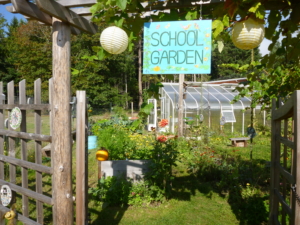 The School Garden is one of the many Food Program projects on Galiano. Coordinators and community volunteers work with the kids, teaching them about gardening, ecology and how to grow food. Kids are involved in planning, tastings, and cooking their harvest. The Food Program also organizes a mini Nettlefest and Applefest for the kids.
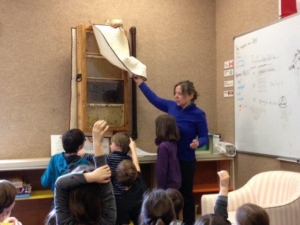 That March morning the school library was warm and smelled of cedar, beeswax. Weeks of anticipation–“When will they arrive?”–culminated. As two students and I approach the covered case, one student hyperventilates. “It’s ok,” I say. “The bees are behind glass.” We speak in hushed tones, overcome by rhythmic buzzing. I lift the cloth cover and we three exhale: ten-thousand pairs of wings shimmer on striped bodies.
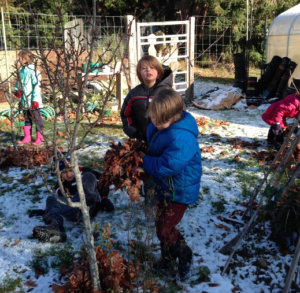 December was ushered in with the Great Bigleaf Rake-Up at the school garden. With maple leaves buried under a dusting of crunchy snow, blue sky above, Galiano School kids gathered around two large maple trees on the school property to learn about densely rich maple leaves and the value they bring to other plants when composted. The kids were divided into four teams: Calcium, Magnesium, Potassium, and Nitrogen, and each team learned some interesting facts about these four elements that figure prominently in maple leaves. What also became quickly apparent was how humans and plants require the same nutrients in order to thrive! For example, blossom End Rot in tomatoes and osteoporosis in humans are both related to calcium deficiency. In another example, magnesium is required by plants to process and use amino acids, vitamins, and proteins, and similarly for humans, magnesium is used to process other elements, notably calcium and potassium. Whereas magnesium deficiency will result in yellow, veiny leaves in plants, a deficiency in humans will impact the functioning of muscles and organs.
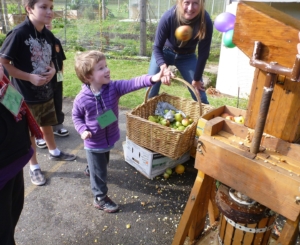 In the words of one student: “Applefest is the best day EVER!” This year’s fun-filled, educational event will be held Wednesday, October 22nd, from 1-3pm at the Galiano Community School.
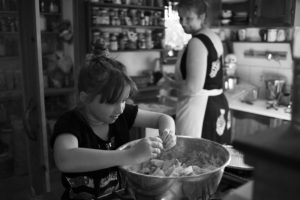 I thought I’d use this article to talk about some of the ways to get kids cooking. Kids that learn how to cook, are much more likely to try new foods and be less picky eaters when they’ve made the food themselves. I’m lucky enough to get to cook with the kids at the school on a regular basis – and I have two kids of my own, who also have lots of friends, that like to play in the kitchen – so whether you’ve got your own kids home for the summer, or grand kids visiting – here are some ideas.
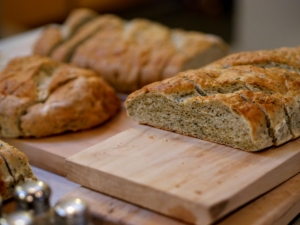 Over two days at the end of April – the students in each class will be making their own loaves of bread – from scratch.